
Spinal Flow Technique
The power of the body.
A gentle touch-based modality that invites you to slow down, listen to your body and explore its natural capacity to adapt and change.
Coming soon to Abundant Living
What is Spinal Flow?
What is Spinal Flow®?
Spinal Flow® is a gentle, touch-based technique developed by Dr Carli Axford that works with the body through a series of specific points along the spine and body.
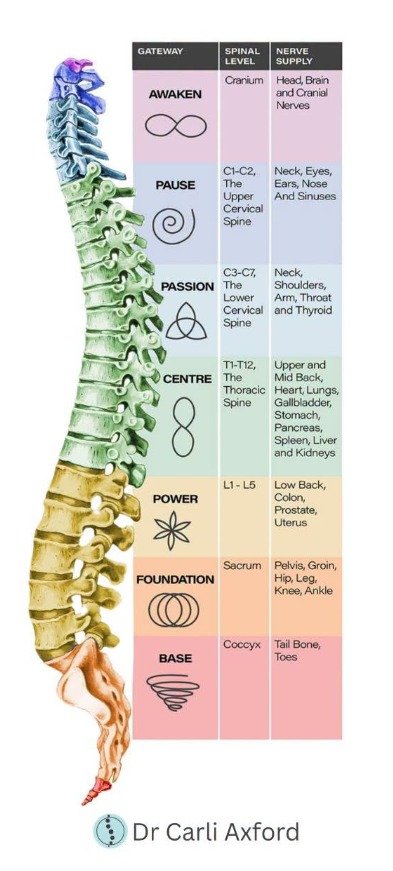
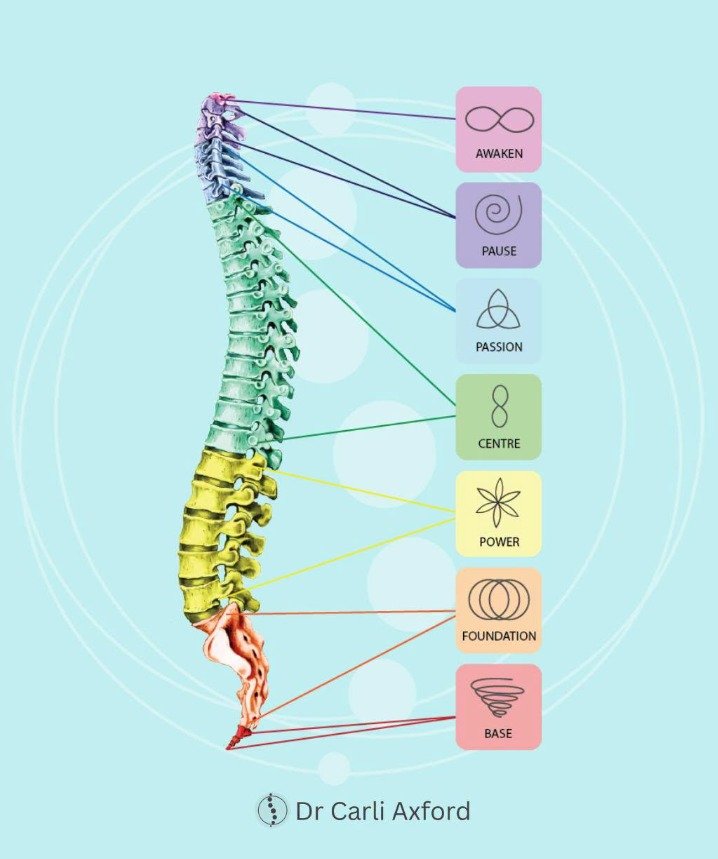
The approach is based around seven gateways of the spine and 33 access points, using light touch rather than manipulation or cracking.
Rather than forcing the body to change, Spinal Flow is centred around listening to the body and supporting its capacity to respond.
This is one of the things that drew me to the practice.
The body is constantly communicating with us. Sometimes we simply need to create enough space to listen.
How it works
Working with the body, not against it
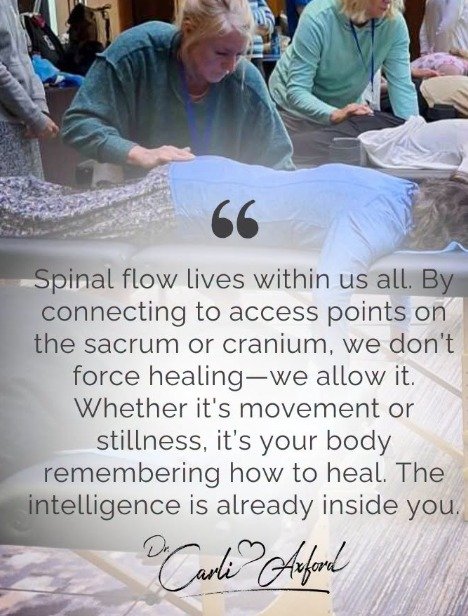
Spinal Flow uses gentle contact at specific access points around the spine, sacrum and cranium.
There is no cracking, manipulation or force.
The intention is to create an environment where the body can settle, respond and explore a different way of moving and being.
Every body is different. Every person's experience is different.
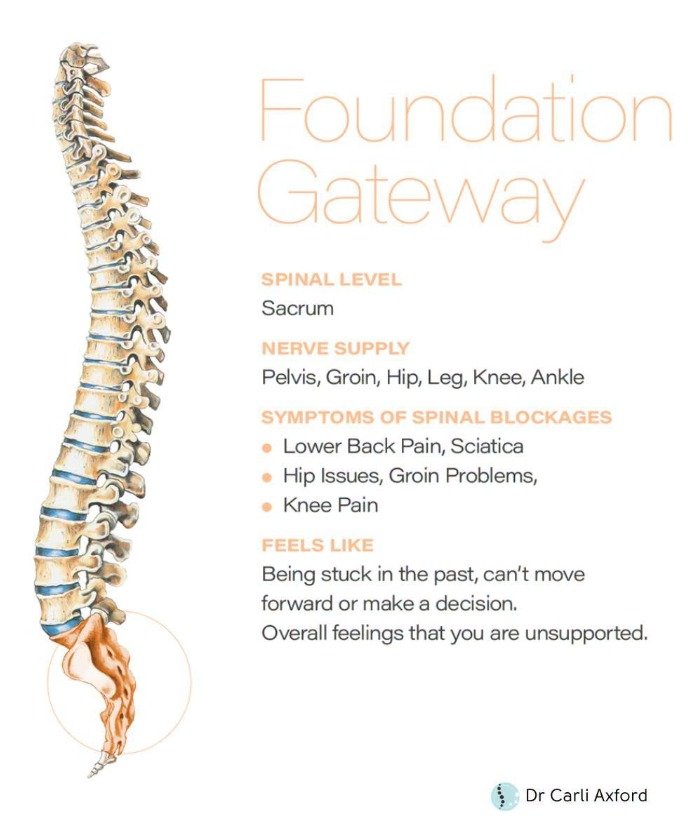
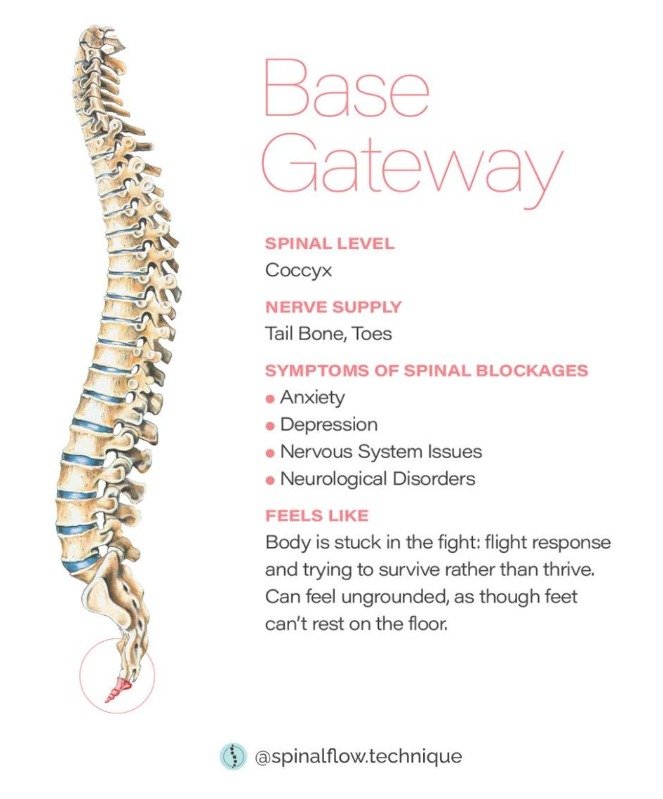
The 7 Gateways of Spinal Flow Technique
Spinal Flow Technique works with seven gateways along the spine, each offering a different pathway for connecting with and listening to the body.
Together, the seven gateways provide a framework for understanding the body and creating space for change through gentle touch.





What to Expect
A first Spinal Flow session will begin with you — your experiences, what you're noticing in your body and what you'd like to explore.
From there, the session may include:
Connect
Time to understand where you're at and what your body may be communicating.
Assess
A gentle posture and gateway assessment helps identify areas to explore.
Experience
You'll then receive a gentle Spinal Flow session, fully clothed and without manipulation or cracking.
Notice
You'll have time afterwards to pause, notice and reflect on your experience.
You don't need to know what your body is doing or understand the technique before you begin. You simply need to be willing to pause and listen.
Why Spinal Flow Technique?
My connection with Spinal Flow began through Biofield Tuning.
Whether working remotely or in person with tuning forks, I found myself repeatedly drawn to the spine — from the base of the skull, down through the spine and towards the sacrum.
I was listening.
And what I experienced was a sense that the body was asking for attention in these areas — inviting space, movement and change where things felt held or stuck.
That curiosity led me to Spinal Flow Technique.
Spinal Flow offered another way of listening to the body, through gentle touch rather than sound.
It felt like a natural extension of the work I was already drawn to: creating space, paying attention and trusting that the body has its own wisdom.
During my own experience with Spinal Flow, I noticed a greater sense of being upright, centred and connected in my body. It gave me a deeper appreciation for just how much the body can communicate when we create the space to listen.
The power of the body.
Coming soon…
Spinal Flow is coming to Abundant Living
I'm currently continuing my training and development in Spinal Flow, with the intention of offering this modality through Abundant Living once I am fully qualified and ready to do so.
If you'd like to hear when Spinal Flow sessions become available, you can register your interest below.